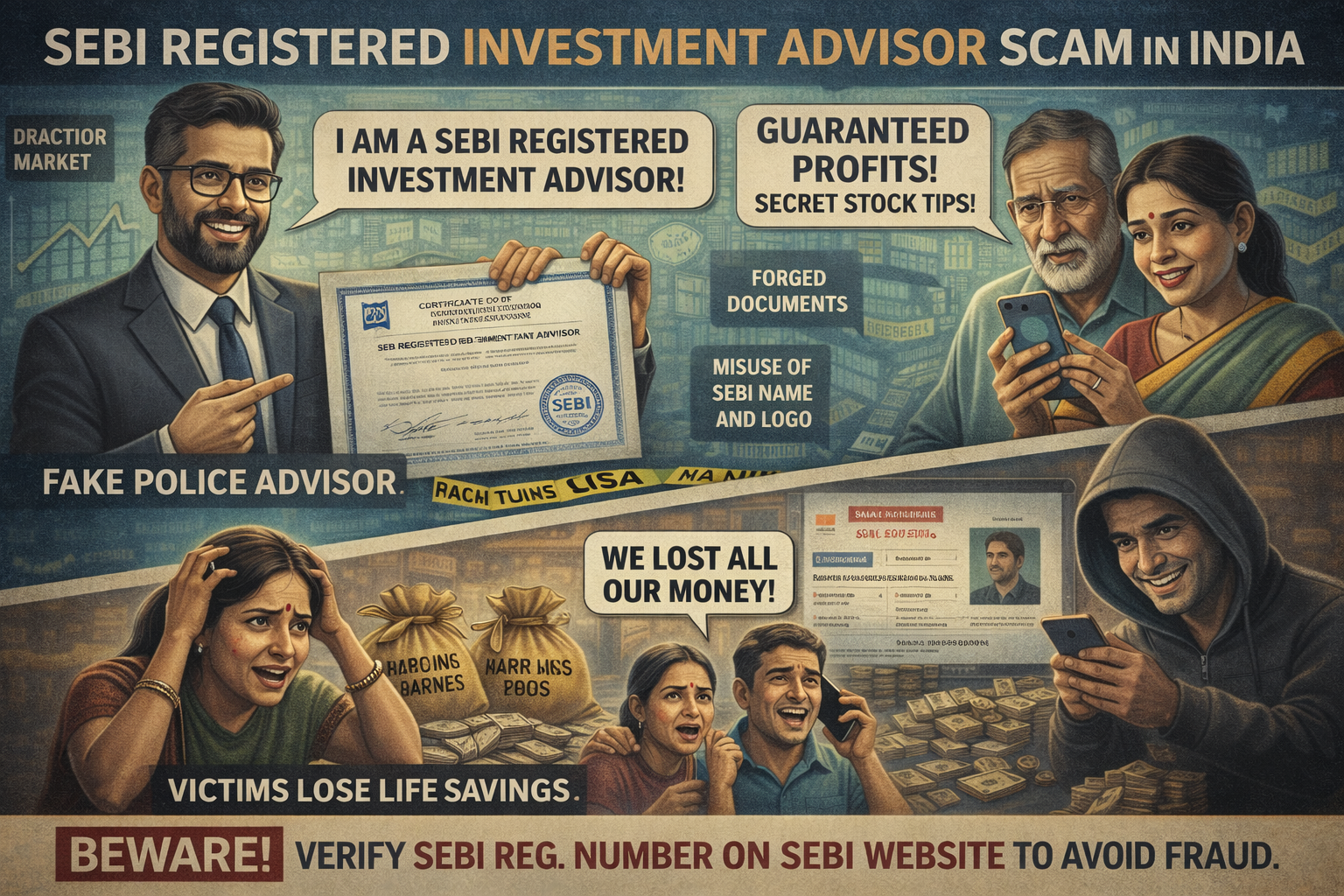
How Investors Are Trapped Using Trust, Fees, and Loss Recovery Plans
Introduction
In India, many people enter the stock market with the hope of earning extra income or building long-term wealth. Since most beginners do not have deep knowledge of the market, they often look for guidance from experts such as stock market advisors, research analysts, and investment advisors. Many of these advisors claim to be SEBI Registered Investment Advisors, which automatically creates trust in the minds of investors.
SEBI registration gives the impression that the advisor is genuine, regulated, and trustworthy. While many advisors do work honestly and professionally, there are also situations where some individuals or companies misuse their SEBI registration, professional image, and investor trust to earn money through high advisory fees, risky trading advice, and continuous loss recovery plans.
These cases are not always obvious scams at the beginning. Everything looks professional, communication is polite, and the process appears genuine. However, slowly investors start losing money either through advisory fees, trading losses, or recovery plans, and by the time they understand the situation, significant financial loss has already occurred.
This article explains in detail how SEBI Registered Investment Advisor scams or unethical practices actually work, how investors get trapped, and how investors can protect themselves.
Understanding the Role of a SEBI Registered Investment Advisor
A SEBI Registered Investment Advisor (RIA) is authorized by the Securities and Exchange Board of India to provide investment advice to clients in exchange for a fee. The advisor is expected to act in the best interest of the client, provide proper risk disclosure, maintain records of advice, and avoid misleading or false promises.
A genuine investment advisor should:
- Understand the client’s financial situation
- Suggest suitable investments
- Explain risks clearly
- Not guarantee profits
- Not push unnecessary trading
- Maintain proper documentation and communication
- Charge transparent and reasonable fees
However, problems begin when advisors focus more on earning fees rather than helping investors.
How the Scam or Trap Usually Starts
Most investors do not directly approach advisors. Instead, the process usually begins when investors receive messages or see advertisements on social media platforms such as WhatsApp, Telegram, Instagram, Facebook, or YouTube.
Typical messages include:
- Stock market tips
- Intraday profit calls
- Options trading strategy
- Portfolio management services
- Guaranteed return plans
- Loss recovery services
- Premium trading groups
- SEBI registered advisor services
The advisor then shares their SEBI registration certificate, company profile, profit screenshots, client testimonials, and trading performance reports. This is done to build trust and create a professional image.
At this stage, everything looks genuine and professional, and investors start believing that they are dealing with a reliable and experienced advisor.
The Trust Building Phase
After initial contact, the advisor spends time building trust with the investor. They talk politely, explain market strategies, discuss risk management, and sometimes even provide a few free trading calls. In some cases, the first few trades may even result in profit, which increases the investor’s confidence.
During this stage, the advisor may say things like:
- We follow proper research and analysis.
- We focus on capital protection.
- Our clients earn regular profits.
- We provide low-risk trading strategies.
- We will guide you in trading.
- You do not need much knowledge; we will help you.
This phase is very important for the advisor because once the investor trusts them, it becomes easier to sell paid services.
Advisory Fees and Paid Plans
Once trust is established, the advisor introduces paid plans such as:
- Intraday trading plan
- Options trading plan
- Premium advisory plan
- Portfolio management plan
- HNI investment plan
- Loss recovery plan
- Algo trading plan
- VIP trading group
- Research subscription plan
The advisor charges fees which can range from a few thousand rupees to several lakhs depending on the plan. After paying the fees, the investor is added to a premium group or starts receiving trading calls.
At this point, the advisor has already earned money through fees, regardless of whether the investor makes profit or loss.
Risky Trading Advice and Overtrading
Many advisors push investors towards high-risk trading such as options trading, futures trading, intraday trading, or leveraged trading. These types of trading involve high risk and can lead to large losses, especially for beginners.
Sometimes advisors also encourage frequent trading. This is called overtrading or churning. Frequent trading increases brokerage, charges, and risk exposure, which reduces the investor’s overall profitability.
Investors often follow the advisor’s instructions without understanding the trades, and when losses happen, they blame the market instead of understanding the risk involved.
The Loss Recovery Trap
One of the most common and dangerous stages in these scams is the loss recovery trap.
When the investor suffers losses, the advisor says:
- The market was unexpected.
- The next trade will recover the loss.
- Join our recovery plan.
- Upgrade to premium plan.
- Increase capital to recover loss faster.
- Take HNI plan for better recovery strategy.
The investor, already in loss, wants to recover the money and therefore pays additional fees or invests more money. This creates a cycle where the investor keeps paying fees and taking more risky trades in the hope of recovering previous losses.
This cycle often results in larger losses over time.
Psychological Factors Behind These Scams
These scams work not only because of financial advice but also because of psychology. Advisors often use psychological tactics such as building authority, showing profit screenshots, creating fear of missing opportunities, and giving hope of loss recovery.
Investors trust advisors because they appear professional and knowledgeable. Investors also fear missing profitable opportunities. When losses happen, investors hope to recover losses and therefore continue following the advisor.
This combination of trust, greed, fear, and hope traps investors in a cycle of losses and fees.
Warning Signs Investors Should Never Ignore
There are several warning signs that investors should always watch for:
- Guaranteed profit promises
- Fixed return commitments
- Pressure to pay fees quickly
- Showing only profit screenshots
- Asking for money in personal accounts
- Giving tips only on WhatsApp or calls
- Pushing options or futures trading aggressively
- Offering loss recovery plans
- Asking to increase capital repeatedly
- Avoiding written agreements
- Not explaining risks clearly
If an advisor shows multiple of these signs, investors should be extremely cautious.
How Investors Can Protect Themselves
Investors can protect themselves by following some basic rules:
- Always verify SEBI registration on the official SEBI website
- Never believe guaranteed return promises
- Do not pay very high advisory fees
- Avoid high-risk trading without proper knowledge
- Never share trading account login details or OTP
- Maintain written communication with advisors
- Regularly check contract notes and account statements
- Do not transfer money to personal bank accounts
- Learn basic investing before trading
- Make your own investment decisions instead of blindly following tips
The most important rule is to always keep control of your own money and trading account.
What To Do If You Have Already Lost Money
If you have already suffered losses due to an advisor, you should take action immediately:
- Stop further payments
- Save all chats, emails, and call recordings
- Save payment receipts and bank statements
- Download trading history and loss statements
- File a complaint on the Cyber Crime Portal
- File a complaint on the SEBI SCORES Portal
- Inform your bank about the fraud
- Send a written complaint to the advisory company
- Keep all evidence safely for future action
Taking action early can improve the chances of recovery or legal action.
Conclusion
SEBI Registered Investment Advisors are supposed to help investors make informed investment decisions, but investors must understand that SEBI registration does not guarantee profits or honesty. Investors should avoid blind trust, understand risks, and always maintain control over their money and trading decisions.
The stock market always involves risk, but the biggest risk is trusting someone blindly with your money without understanding what they are doing.
In the stock market, loss is part of the game, but blind trust can become the biggest loss.
Written by
admin