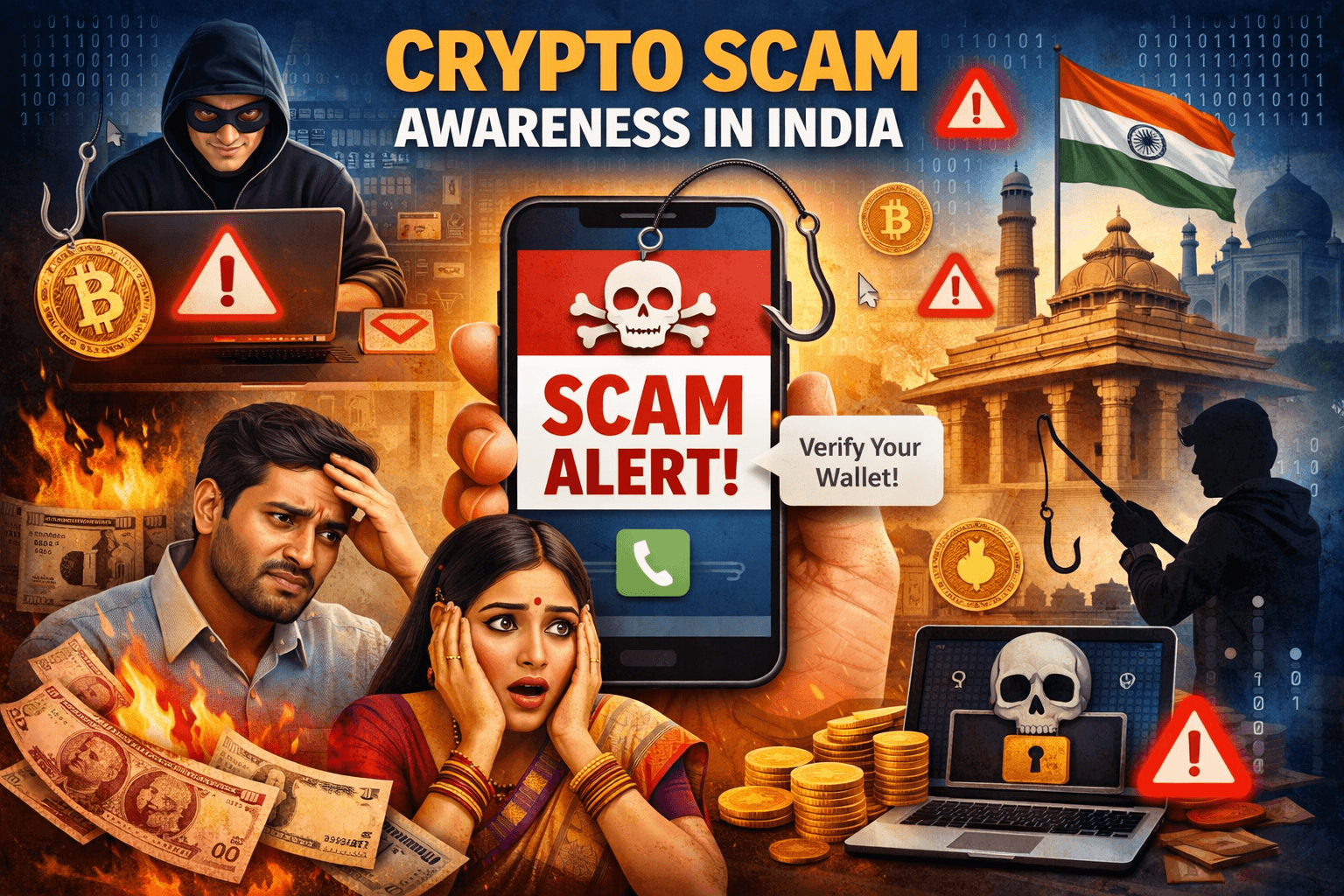
How Cryptocurrency Scams Work and How to Protect Yourself
Introduction
Cryptocurrency scams are rapidly increasing in India as more people become interested in digital assets like Bitcoin, Ethereum, and other cryptocurrencies. Scammers take advantage of lack of awareness, greed for high returns, and technical complexity to cheat people.
These frauds usually promise high or guaranteed returns, fake investment opportunities, or quick profits through crypto trading, mining, or insider tips. Victims are often convinced to transfer money or cryptocurrency, after which scammers either disappear or block them.
This article explains how crypto scams work, common types, warning signs, and how to stay safe.
What is a Crypto Scam?
A crypto scam is a type of financial fraud where scammers trick people into investing money in fake cryptocurrency schemes or steal their crypto funds through deception.
Unlike traditional banking, cryptocurrency transactions are usually irreversible, which makes recovery difficult.
Common Types of Crypto Scams
1. Fake Investment Platforms
Scammers create fake websites or apps that look like real crypto trading platforms.
They show:
- Fake profits
- Fake dashboards
- Increasing balance
Victims are encouraged to invest more money, but when they try to withdraw:
- Withdrawal is blocked
- Extra fees are demanded
- Account is frozen
2. Guaranteed Profit Scam
Fraudsters promise:
- Daily fixed income
- 2x or 3x returns
- “No loss trading”
- “100% safe investment”
Reality:
No one can guarantee profits in crypto or trading.
3. Telegram / WhatsApp Group Scam
Scammers create groups where:
- Fake members show profit screenshots
- Admin gives trading signals
- People are asked to invest
These groups create false trust and social proof.
4. Fake Crypto Exchange Scam
Scammers build fake apps or websites similar to real exchanges.
They may:
- Allow small withdrawal initially
- Build trust
- Later block large withdrawals
5. Recovery Scam
Victims of previous scams are targeted again.
Scammers claim:
- “We can recover your lost crypto”
- “Pay recovery charges”
After payment:
- No recovery happens
- Victim loses more money
6. Impersonation Scam
Fraudsters pretend to be:
- Crypto experts
- Influencers
- Company representatives
They contact victims and offer:
- Investment opportunities
- Trading tips
- Account management
7. Phishing & Wallet Theft
Victims receive:
- Fake links
- Emails
- Apps
They are asked to:
- Enter wallet details
- Share private keys
- Enter OTP
This leads to complete wallet theft.
Step-by-Step Crypto Scam Process
Step 1 – Contact
Scammer contacts via:
- Social media
- Telegram
- Dating apps
- Ads
Step 2 – Trust Building
They:
- Talk politely
- Share fake profits
- Show screenshots
- Build emotional connection
Step 3 – Investment
Victim is asked to:
- Invest small amount
- Use crypto platforms
- Transfer funds
Step 4 – Fake Profits
Victim sees:
- Increasing balance
- High returns
This builds confidence.
Step 5 – More Investment
Scammer pushes:
- “Invest more for higher profit”
- “Limited time opportunity”
Step 6 – Withdrawal Problem
When victim tries to withdraw:
- Account blocked
- Tax/fee demanded
- More money requested
Step 7 – Disappearance
- Scammer blocks victim
- Website shuts down
- No recovery possible
Psychology Behind Crypto Scams
Scammers use human emotions:
- Greed (high profit temptation)
- Fear of missing out (FOMO)
- Trust building
- Urgency
- Social proof
- Lack of knowledge
Major Warning Signs
Be alert if:
- Guaranteed profits are promised
- “No risk” investment is offered
- Unknown apps/websites are used
- Withdrawal requires extra payment
- Pressure to invest quickly
- Communication only on Telegram/WhatsApp
- No proper company registration
- Unrealistic returns shown
- Asked to share private keys or OTP
How to Protect Yourself
- Never trust guaranteed returns
- Use only trusted crypto platforms
- Do proper research before investing
- Do not share private keys or OTP
- Avoid unknown Telegram groups
- Do not send money to strangers
- Verify company authenticity
- Avoid emotional or rushed decisions
- Start with small investments only
- Consult trusted financial advisors
What To Do If You Are a Victim
If you have been scammed:
- Inform your bank immediately
- Call Cyber Crime Helpline – 1930
- File complaint on Cyber Crime Portal
https://cybercrime.gov.in - Save all chats and screenshots
- Save transaction details
- Report quickly (time is critical)
Final Conclusion
Crypto scams are increasing due to lack of awareness and high profit temptation. Scammers use fake platforms, social media, and emotional manipulation to cheat people.
Always remember:
- Crypto investment is risky
- No one can guarantee profits
- If it sounds too good to be true, it is likely a scam
- Never trust unknown people with your money
Final Line
“Crypto me profit mil sakta hai, lekin guarantee nahi…
Aur jahan guarantee mil rahi ho, wahan scam hone ke chances zyada hote hain.”

Written by
admin